Why Branding and UI/UX Matter More Than Ever for Your Website
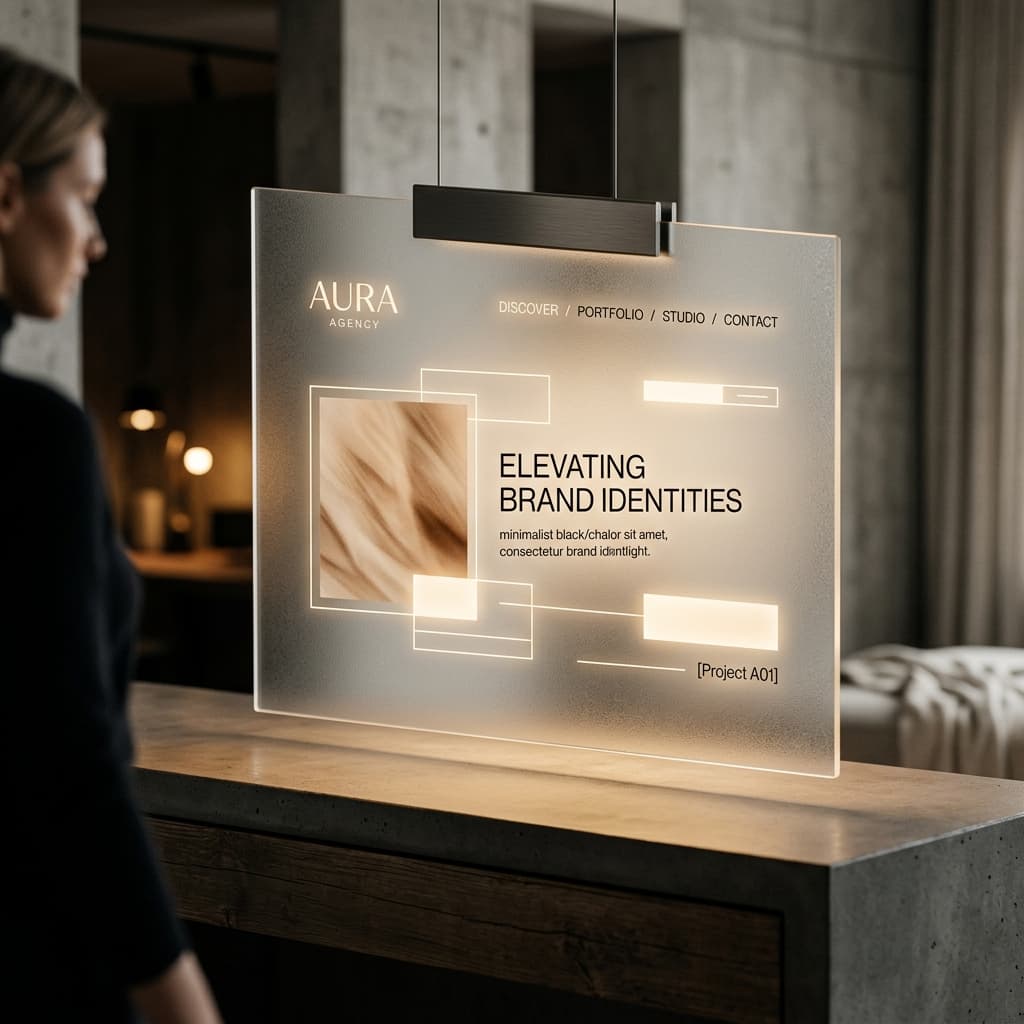
Your website is rarely just an informational brochure—for most B2B and growth-stage companies, it is the primary environment where prospective clients evaluate your operational competence.
Long before a buyer speaks to your sales team, they experience your visual hierarchy, response speed, content clarity, and form ergonomics. Within seconds, they decide whether to initiate a conversation or bounce back to search results.
Your Website Is Your First Operational Audition
Consider two companies offering comparable engineering or hospitality services. The first site feels cluttered, slow, and inconsistent. The second feels calm, structured, and effortless to navigate. Buyers naturally gravitate toward the second vendor because a disciplined interface signals a disciplined delivery team.
Branding Builds Recognition Before It Builds Loyalty
A complete brand system encompasses your colour architecture, typographic scale, editorial imagery, and messaging tone. When these tokens remain consistent across your web platform, social channels, and sales decks, recognition compounds across every touchpoint.
UI Engineering Creates Visual Clarity
User Interface (UI) design governs the interactive surfaces of your platform: button states, navigation contrast, typographic spacing, and form controls. Clean UI eliminates visual noise so users always know where they are on the page and which action carries primary weight.
UX Architecture Removes Funnel Friction
User Experience (UX) determines how many steps stand between buyer intent and a completed inquiry. Every unnecessary click or ambiguous form field bleeds pipeline:
- Legacy high-friction journey: Home → Generic Services Overview → PDF Brochure → Buried Contact Link → Unvalidated 14-Field Form
- Engineered conversion journey: Specific Service Spec Sheet → Quantitative Case Study Proof → 1-Click Consultation Intake Connected to Custom CRM
When we redesigned the booking UX for FlyingLyte, streamlining the multi-step flow cut funnel drop-off by 55% and lifted lead capture by 40%.
Four Psychological Levers Inside High-Converting UX
1. Cognitive Familiarity
Predictable navigation patterns and consistent visual tokens let buyers focus on your offer rather than learning how to use your interface.
2. Progressive Disclosure
Presenting high-level value propositions first—followed by granular technical specifications, pricing tiers, and Q&As as the user scrolls—prevents information overload.
3. Contextual Social Proof
Placing real client metrics and case study outcomes directly beside service descriptions resolves buyer hesitation at the exact moment of evaluation.
4. Perceived Craftsmanship
Crisp AVIF imagery, zero layout shift, and accessible keyboard/touch ergonomics send an unmistakable signal: this company sweats the details.
Strong Branding Protects Margin and Pricing Power
When two businesses look interchangeable, procurement teams compare them strictly on lowest price. When your brand and UX clearly articulate superior architecture, transparent SLAs, and proven outcomes, price becomes just one factor in a value-led decision.
Shalini Bhadoria
Founder & Principal Systems Architect • Full-Stack Next.js, PostgreSQL CRM & Search Architecture Lead at Infriva Solutions
Shalini leads digital architecture, custom CRM engineering, and Full-Stack SEO/GEO systems at Infriva Solutions, helping B2B and growth-stage companies replace manual workflows with high-converting digital infrastructure.
Learn more about Infriva's engineering methodologyWeb Dev & UI/UX Design
High-Performance Digital Properties. Architect a conversion-optimized scalable technical foundation.
Custom CRM Systems
Bespoke customer relationship management architecture designed around your sales workflow.
Premium Content Creation
Blog, Social & Video Distribution. Enhance brand authority and drive high-intent organic traffic.
FlyingLyte: A high-performance Next.js travel booking engine and automated WhatsApp CRM pipeline built to capture and convert leads at scale.
A high-performance booking engine that streamlined the customer experience and increased lead capture by 40%. Built on Next.js with automated WhatsApp CRM workflows.
Ready to upgrade your systems?
Let's discuss how we can implement these strategies in your business.
Start a Conversation